
What Is My Birthstone?
How to Find Yours (and What to Do With It)
What Is My Birthstone? How to Find Yours (and What to Do With It)
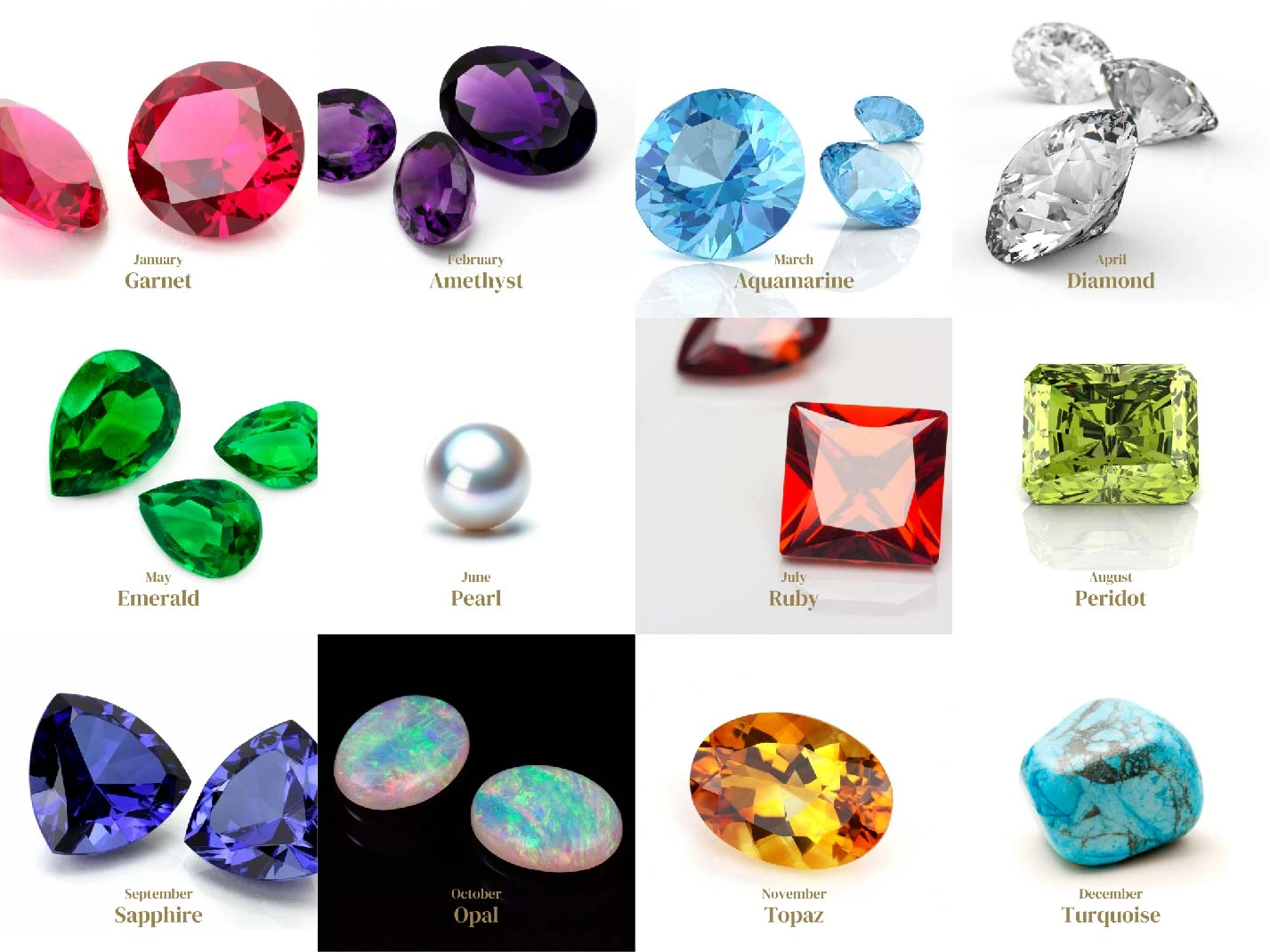
Your birthstone is simply the gemstone linked to the month you were born. If you were born in January it's garnet, February is amethyst, March is aquamarine, and so on through to December's turquoise. That's the whole answer in a sentence — but it's not quite the end of the story, because a few months have more than one stone, there are two different lists in common use, and "the month you were born" isn't always the only way people choose. This guide walks you through finding yours, understanding why you might have a choice, and deciding what to actually do with it once you know.
Key Takeaways
- Your birthstone is the gemstone traditionally assigned to your birth month.
- Some months have more than one stone, so you may have a choice rather than a single answer.
- There are two lists — modern and traditional — and Australian jewellers use both.
- You don't have to be tied to your own month; plenty of people choose by colour, meaning or family connection.
- Once you know yours, the nicest next step is usually a piece you'll actually wear — a ring, a pendant, or a family design.
- Want the full month-by-month chart? See our complete guide to birthstones by month.
Quick Summary: Finding Your Birthstone in Three Steps
- Find your birth month — that's the starting point for everything.
- Check which stone (or stones) it maps to — some months have one, others have two or three.
- Decide which one speaks to you — by colour, by meaning, or by what you'll enjoy wearing.
That's genuinely all there is to the "finding" part. The rest of this guide helps you make a good choice when a month offers more than one option, and turn that choice into something lasting.
How Do I Find My Birthstone?
The quickest way is to match your birth month to its stone. Every month of the year has at least one birthstone assigned to it, so once you know your month, you know your stone. January babies get garnet, July babies get ruby, September babies get sapphire — the list runs cleanly from one end of the calendar to the other.
Where people pause is when their month turns out to have more than one option. June, August, October, November and December all offer a choice of stones, and that can feel confusing if you were expecting a single tidy answer. It isn't a mistake or a contradiction — it's just the result of two different traditions sitting side by side, which we'll unpack in a moment. If your month has several stones, treat it as a menu rather than a puzzle: you get to pick the one you like best.
If you'd like to see every month laid out at once, with colours and meanings side by side, our birthstones by month chart has the full table. This guide is the "how do I choose" companion to that page.
Why Does My Month Have More Than One Birthstone?
This is the question we hear most, so it's worth answering properly. The short version: there are two lists, and they don't always agree.
The modern list was standardised in 1912 and leans towards clear, hard-wearing gems that are easy to set into rings. The traditional list is older and draws on centuries of cultural and historical custom. For most months the two lists name the same stone, but for a handful they diverge — and over the years the trade has also added newer stones alongside long-standing favourites. That's why August can be peridot, spinel or sardonyx, and why December offers turquoise, zircon, tanzanite or blue topaz.
None of these options is more "correct" than another. A traditional stone isn't outranked by a modern one, and a newer addition isn't lesser for being recent. They're all legitimate birthstones for that month — which means if your month has a few, you genuinely get to choose.
Modern or Traditional — Which Should I Choose?
If your month gives you a modern and a traditional option, the decision usually comes down to three practical things.
Colour. This is the one most people lead with, and there's nothing wrong with that. If March's aquamarine blue speaks to you more than the deep green of the traditional bloodstone, that's a perfectly good reason to choose it. You're the one who'll be looking at it.
Durability. If the piece will be worn every day — an everyday ring especially — hardness matters. Some stones shrug off knocks and scratches, while softer ones prefer a gentler life or a more protective setting. A stone you'll wear constantly is worth choosing partly on how well it'll cope.
Meaning. Each stone carries its own associations, and sometimes one simply resonates more than the other. If the symbolism of one option feels more like you, let that guide the choice.
There's no wrong answer here. A good jeweller will happily talk you through the trade-offs for your specific month, and in a lot of cases people end up choosing on feel — the stone they keep coming back to is usually the right one.
To make it concrete, here's how the choice tends to play out for the months that offer more than one stone. June gives you pearl, moonstone or alexandrite — pearl for a classic, timeless look, moonstone for its soft glow, or alexandrite if you love the idea of a stone that shifts colour in different light. August offers peridot's bright lime green, spinel in a range of colours, or the banded traditional sardonyx. October is opal or tourmaline — opal for that one-of-a-kind play of colour, tourmaline if you want a broader palette to pick from. November is topaz or citrine, both warm-toned, with topaz spanning many colours and citrine bringing sunny yellows and oranges. And December leans into blues, with turquoise, blue zircon, blue topaz or the violet-blue of tanzanite. Seeing them side by side often makes the choice easier than it first seems.
Can I Choose a Birthstone That Isn't My Birth Month?
Absolutely, and plenty of people do. The idea of a birthstone is meaningful, but it isn't a rule you're bound by. There are a few common reasons someone picks a stone outside their own month.
Colour preference. Sometimes you just love a particular stone. If you're drawn to emerald green but you were born in November, there's nothing stopping you wearing emerald.
Family connection. Many people choose a stone that represents someone they love — a partner's month, a child's month, or a parent's. This is the whole idea behind a mother's ring, where the stones of each child are brought together in one piece.
Meaning over month. If the symbolism of a particular stone fits you better than your assigned one, that's reason enough. Birthstones are personal, and personal means yours to decide.
So while your birth month is the traditional starting point, think of it as exactly that — a starting point, not a boundary.
What Should I Do Once I Know My Birthstone?
Knowing your stone is lovely, but it really comes to life when it's something you can wear or give. Here are the directions people most often take.
A ring. The most popular choice, and a natural one — a birthstone ring works as an everyday piece or something more special. If it'll be worn daily, this is where the durability question matters most, so it's worth a conversation about setting and stone hardness.
A pendant or necklace. A gentler option for softer stones, since a pendant takes far less daily knocking-about than a ring. It's also a lovely way to carry a stone that represents someone else.
A family piece. Bringing several birthstones together — a mother's ring, or a pendant holding each family member's month — turns a collection of stones into a single meaningful piece. These are among the most rewarding pieces to design, because they're genuinely one of a kind.
Reworking an inherited stone. If you've been handed down a piece that isn't quite to your taste, the stone doesn't have to stay in its old setting. Resetting an inherited gem into something you'll actually wear is one of the nicest things you can do with it — the sentiment stays, the style updates.
Choosing a Birthstone as a Gift
A lot of people arrive at birthstones not for themselves but for someone else — and it's one of the most thoughtful gifts going, because it's personal by design. If you're buying for someone, the same steps apply: find their birth month, check the stone or stones it maps to, and choose from there. The difference is that you're now guessing at their taste, so a couple of pointers help.
If their month offers a choice, colour is usually the safest guide — pick the shade you've seen them wear or gravitate towards. If you're not sure, a classic option is rarely wrong; pearl for June or opal for October, for instance, are widely loved. And if the gift is meant to carry meaning — a new parent, a milestone birthday, a memorial piece — it's worth mentioning that to the jeweller, because it often shapes the design as much as the stone does. A birthstone gift tends to land well precisely because it says you thought about who the person is, not just what they might like.
A Few Practical Tips Before You Buy
Whatever you choose, a few things are worth keeping in mind so you end up with a piece that lasts.
Think about how often it'll be worn, and match the stone and setting to that. Ask the jeweller about any treatments a stone has had, since that affects both care and price — a good one will tell you openly. And give a little thought to upkeep: some stones are perfectly happy with everyday wear, while others prefer to be kept for special occasions and cleaned gently. None of this is complicated, but a short conversation up front saves surprises later.
Frequently Asked Questions
What is my birthstone if I was born in a month with more than one?
You have a choice. Months like June, August, October, November and December carry several stones, and any of them counts as your birthstone — pick the one you like best on colour, meaning or durability.
Is my birthstone based on the modern or traditional list?
Either. Both lists are valid, and Australian jewellers work with both. For most months they name the same stone; where they differ, you're free to choose.
Can two people have the same birthstone?
Yes — everyone born in the same month shares a birthstone (or the same set of options). What makes a piece personal is the design, not the exclusivity of the stone.
Do birthstones have to match my star sign?
No. Birthstones are assigned by calendar month, not by zodiac sign, though the two traditions are historically related. If you'd prefer to choose by star sign that's your call, but the standard birthstone is month-based.
Where can I see all the birthstones by month?
Our complete birthstones by month guide lays out all twelve months with their stones, colours and meanings in one chart.
Ready to Make Yours Into Something Special?
Finding your birthstone is the easy part — the fun begins when you turn it into a piece you'll keep. Whether it's a ring you'll wear every day, a pendant that carries a loved one's month, or a family design that gathers everyone's stones together, our team at Forest Hill would love to help you get it right. Come and talk to us about a custom birthstone piece, and we'll help you turn a birth month into something you'll treasure.
Birthstones: Every Month’s A Gem | Custom Made Jewellery
Jewellery Cleaning at Home: 7 Common Mistakes That Can Damage Your Jewellery
Jewellery Cleaning at Home: 7 Common Mistakes That Can Damage Your Jewellery Most people want their jewellery to look its best, so it's natural to reach for a cleaning cloth, a household cleaner, or one of the many jewellery cleaning tips found online. Unfortunately,...
Is Your Diamond Loose
Is Your Diamond Loose? Subtle Signs Jewellery Owners Shouldn’t Ignore Most people don’t think about the security of their diamond until something feels off. A slight movement, an unusual sound, or even just a feeling that the ring isn’t sitting quite right — these...