
Birthstones by Month: The Complete Australian Guide
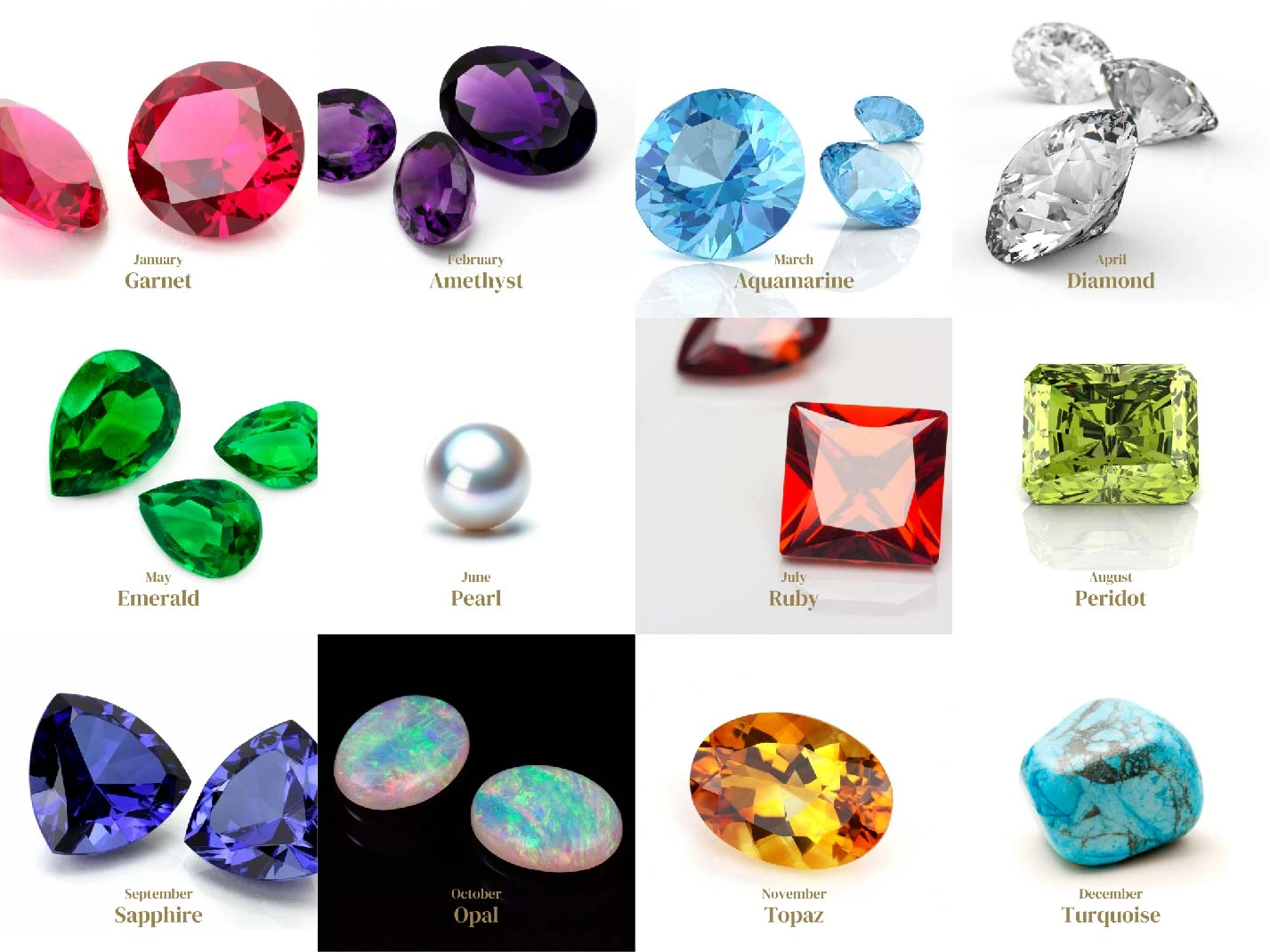
There are twelve birth months, and each one has its own birthstone — twelve gemstones in all, though the modern list actually recognises nineteen stones, because several months carry more than one. Here's the quick version before we go any further: January is garnet, February is amethyst, March is aquamarine, April is diamond, May is emerald, June is pearl (or alexandrite or moonstone), July is ruby, August is peridot (or spinel or sardonyx), September is sapphire, October is opal (or tourmaline), November is topaz (or citrine), and December is turquoise (or zircon, tanzanite, or blue topaz).
If some of those months look like they're hedging their bets with two or three stones, you're right — and there's a good reason for it, which we'll get to. The short answer is that there are two lists in common use, a modern one and an older traditional one, and Australian jewellers happily draw from both.
Key Takeaways
- There are twelve birth months and nineteen recognised modern birthstones in total.
- The modern list was standardised in 1912 and has been updated a handful of times since.
- Some months have more than one stone because the modern and traditional lists don't always agree, and a few stones were added later.
- In Australia, most jewellers stock stones from both lists, so you're rarely locked into a single option.
- Not sure which one is yours, or want help picking a stone you'll actually love wearing? Have a read of our guide on how to find your birthstone.
The Birthstone Chart
Here's every month at a glance — the modern stone, the traditional or alternative option, the colour you'll usually see it in, and what it has come to represent.
| Month | Modern birthstone(s) | Traditional / alternative | Colour | Meaning |
|---|---|---|---|---|
| January | Garnet | Garnet | Deep red (also green, orange, pink) | Protection, friendship, trust |
| February | Amethyst | Amethyst | Purple | Calm, clarity, balance |
| March | Aquamarine | Bloodstone | Pale blue to blue-green | Tranquillity, courage, safe travel |
| April | Diamond | Diamond | Colourless (and fancy colours) | Enduring love, strength |
| May | Emerald | Emerald | Rich green | Rebirth, growth, good fortune |
| June | Pearl, Alexandrite, Moonstone | Pearl | White, colour-change, milky glow | Purity, adaptability, calm |
| July | Ruby | Ruby | Vivid red | Love, health, wisdom |
| August | Peridot, Spinel | Sardonyx | Lime green (spinel varies) | Strength, protection, joy |
| September | Sapphire | Sapphire | Deep blue (and other hues) | Wisdom, loyalty, nobility |
| October | Opal, Tourmaline | Opal, Tourmaline | Play-of-colour; broad spectrum | Creativity, hope, expression |
| November | Topaz, Citrine | Topaz | Golden, yellow-orange | Warmth, generosity, calm |
| December | Turquoise, Zircon, Tanzanite, Blue Topaz | Turquoise, Lapis Lazuli | Blues and violet-blues | Friendship, good fortune, protection |
How the Modern Birthstone List Came to Be
The idea of a stone for each month is old — much older than any jewellery shop. The first-century historian Josephus is often credited with drawing a link between the twelve stones set into the breastplate of Aaron, described in the Book of Exodus, the twelve months of the year, and the twelve signs of the zodiac. Those twelve stones stood for the twelve tribes of Israel, and over the centuries the association drifted from the breastplate to the calendar we use today.
The list most jewellers work from now, though, has a much more precise birthday. In 1912, the American National Retail Jewelers Association — the body known today as Jewelers of America — met in Kansas City and adopted a standardised list of "modern" birthstones. The goal was simply to bring order to what had been a patchwork of regional and cultural customs. One quiet detail says a lot about why the list looks the way it does: it leaned towards transparent, durable gems, which are far easier to set into rings and mothers' rings than something like a pearl or a turquoise cabochon.
That 1912 list wasn't the final word. Alexandrite (June) and citrine (November) were added in 1952, tanzanite joined December in 2002, and spinel was formally recognised as an August stone in 2016. So when you see a stone described as "modern" versus "traditional" or "alternative", it's usually this layered history doing the talking.
How Many Birthstones Are There?
Twelve months, nineteen recognised modern stones. The gap between those two numbers is the thing that trips people up, so it's worth explaining plainly.
Some months carry more than one birthstone for a few reasons. The modern and traditional lists don't always name the same gem — March, for instance, is aquamarine on the modern list but bloodstone on the older one. A few months picked up extra stones as the trade updated the list over the years. And in some cases a newer, more available, or more affordable option was added alongside a long-standing favourite. June, October, November and December are the busiest months, each offering a genuine choice of stone.
You may also come across the phrase "nine gems", which points to a different tradition altogether — the Navaratna, a nine-gemstone arrangement from Vedic custom, where stones are tied to celestial bodies rather than calendar months. It's a separate system, but worth knowing about if that's what led you here.
Modern Versus Traditional Birthstones (and What It Means in Australia)
The two lists are easy to tell apart once you know what you're looking at. The modern list is the 1912-standardised one, made up mostly of clear, hard-wearing gems, and it's what you'll find behind most Australian jewellery counters. The traditional list draws on older cultural and historical assignments, and it sometimes names a different stone for the same month — sardonyx for August, or bloodstone for March, are good examples.
Here in Australia, there's no rule that says you have to pick one list over the other. Most jewellers, ourselves included, are happy to work with whichever stone speaks to you. There's also a lovely local footnote worth mentioning: opal, October's stone, is Australia's national gemstone, and the vast majority of the world's fine opal is mined right here. If you're an October baby, you're spoilt for choice on home soil.
Month-by-Month Breakdown
January — Garnet
Garnet is best known in its deep, fiery red, though it actually turns up in greens, oranges and pinks too. It has long been linked with protection, friendship and trust, and was once carried by travellers as a safeguard on the road. It's hard-wearing enough for everyday jewellery with a little care.
February — Amethyst
Amethyst is the purple variety of quartz, ranging from soft lilac to deep violet. Long favoured by royalty for its regal colour, it's associated with calm, clarity and balance. At around 7 on the Mohs hardness scale, it's a dependable choice for rings and everyday pieces.
March — Aquamarine
Named from the Latin for seawater, aquamarine is the pale blue to blue-green member of the beryl family. Sailors once carried it for safe passage, and it's still tied to tranquillity and courage. Sitting at 7.5 to 8 on the Mohs scale, it wears beautifully day to day.
April — Diamond
Diamond is prized above all for its hardness and brilliance, and it's the traditional choice for engagement rings for exactly that reason. Beyond enduring love, it's long been a symbol of strength. Colourless is most familiar, but diamonds occur in yellows, pinks, blues and champagnes too.
May — Emerald
Emerald's lush green has stood for rebirth, growth and good fortune for thousands of years. The most valuable stones show a vivid, saturated colour. Emeralds are a little more delicate than some gems, so they reward a gentle setting and careful handling.
June — Pearl, Alexandrite, Moonstone
June is one of the most generous months. Pearls, the only gem grown inside a living creature, suggest purity and are a classic gift. Alexandrite famously shifts colour under different light, a nod to adaptability. Moonstone carries a soft, floating glow known as adularescence.
July — Ruby
Ruby is often called the king of gems, and its vivid red has represented love, health and wisdom across many cultures. Fine rubies are among the most sought-after stones in the world. Durable and rich in colour, ruby makes a striking everyday statement.
August — Peridot, Spinel, Sardonyx
Peridot brings a bright, unmistakable lime green, and unlike most gems its colour comes from the mineral itself rather than trace impurities. Spinel, added in 2016, offers everything from fiery red to soft pink. Sardonyx is the traditional August stone, banded and ancient.
September — Sapphire
Most people picture sapphire as a deep, velvety blue, but it comes in nearly every colour except red (a red one is simply a ruby). It has long stood for wisdom and loyalty, and was a favourite of priests and royalty. It's also extremely hard-wearing — an excellent everyday stone.
October — Opal, Tourmaline
Opal is the showstopper here, with its shifting play-of-colour making every stone one of a kind — and it's Australia's own gemstone. Tourmaline, October's other option, spans an unusually broad range of colours and is associated with creativity and expression.
November — Topaz, Citrine
Topaz comes in many colours, though the warm golden hue is the most loved for November. Citrine brings sunny yellows and oranges and was long thought of as a gift from the sun. Both are cheerful, warm-toned stones that suit the run-up to summer down here.
December — Turquoise, Zircon, Tanzanite, Blue Topaz
December leans into cool blues. Turquoise is one of the oldest gemstones known and was treasured as a protective charm. Blue zircon has a lively brilliance, blue topaz is bright and accessible, and tanzanite — discovered in Tanzania in the 1960s — offers a remarkable violet-blue found nowhere else.
Choosing and Caring for Birthstone Jewellery
A birthstone is often bought to be worn for years, so a few practical points are worth keeping in mind before you buy.
Think about hardness. How hard a stone is decides how well it copes with daily wear. Diamond, sapphire and ruby shrug off knocks, while softer stones like opal and pearl want a gentler life and a more protective setting. The Mohs hardness scale is a handy reference here.
Look at quality and ask about treatments. Colour, clarity, cut and carat all shape how a stone looks and what it's worth, and many stones are treated to improve colour or clarity. A good jeweller will tell you openly what has been done to a stone, because it affects both care and price.
Match the setting to the wearer. A stone worn every day benefits from a secure setting — a bezel that wraps the gem, for instance — while a special-occasion piece can afford something more delicate. The style should suit the person, whether that's classic, modern or something made just for them.
In our Forest Hill workshop, the birthstone questions we're asked most often aren't really about the stones at all — they're about people. A mother wanting each of her children's months in a single ring, or someone bringing in a grandmother's stone to reset into something they'll actually wear. That's where a birthstone stops being a chart entry and starts being a piece with a story, and it's the part of the job we enjoy most.
Frequently Asked Questions
What are the birthstones for each month?
January is garnet, February amethyst, March aquamarine, April diamond, May emerald, June pearl (or alexandrite or moonstone), July ruby, August peridot (or spinel or sardonyx), September sapphire, October opal (or tourmaline), November topaz (or citrine), and December turquoise (or zircon, tanzanite or blue topaz).
How many birthstones are there in total?
There are twelve birth months but nineteen recognised modern birthstones, because several months have more than one official stone.
Why do some months have more than one birthstone?
Because the modern and traditional lists sometimes name different stones, and because the trade has added options over the years — alexandrite and citrine in 1952, tanzanite in 2002 and spinel in 2016.
What's the difference between modern and traditional birthstones?
The modern list was standardised in 1912 and favours clear, durable gems. The traditional list is older and draws on cultural and historical customs, occasionally naming a different stone for the same month.
Is opal Australia's birthstone?
Opal is October's birthstone and also Australia's national gemstone. Most of the world's fine opal is mined in Australia, which makes it an especially meaningful choice for October babies here.
Can I wear a birthstone that isn't my birth month?
Absolutely. There's no rule that ties you to your own month — plenty of people choose a stone by colour, meaning or family connection instead. Pick the one you'll love wearing.
Bring Your Birthstone to Life
A birthstone chart is a lovely place to start, but the stones really come into their own when they're set into something personal — a ring that gathers the family's months together, a pendant reworked from an inherited gem, or a piece designed from scratch around a stone you've fallen for. If you'd like a hand choosing or setting yours, our team at Forest Hill would love to help.
Talk to us about a custom birthstone piece